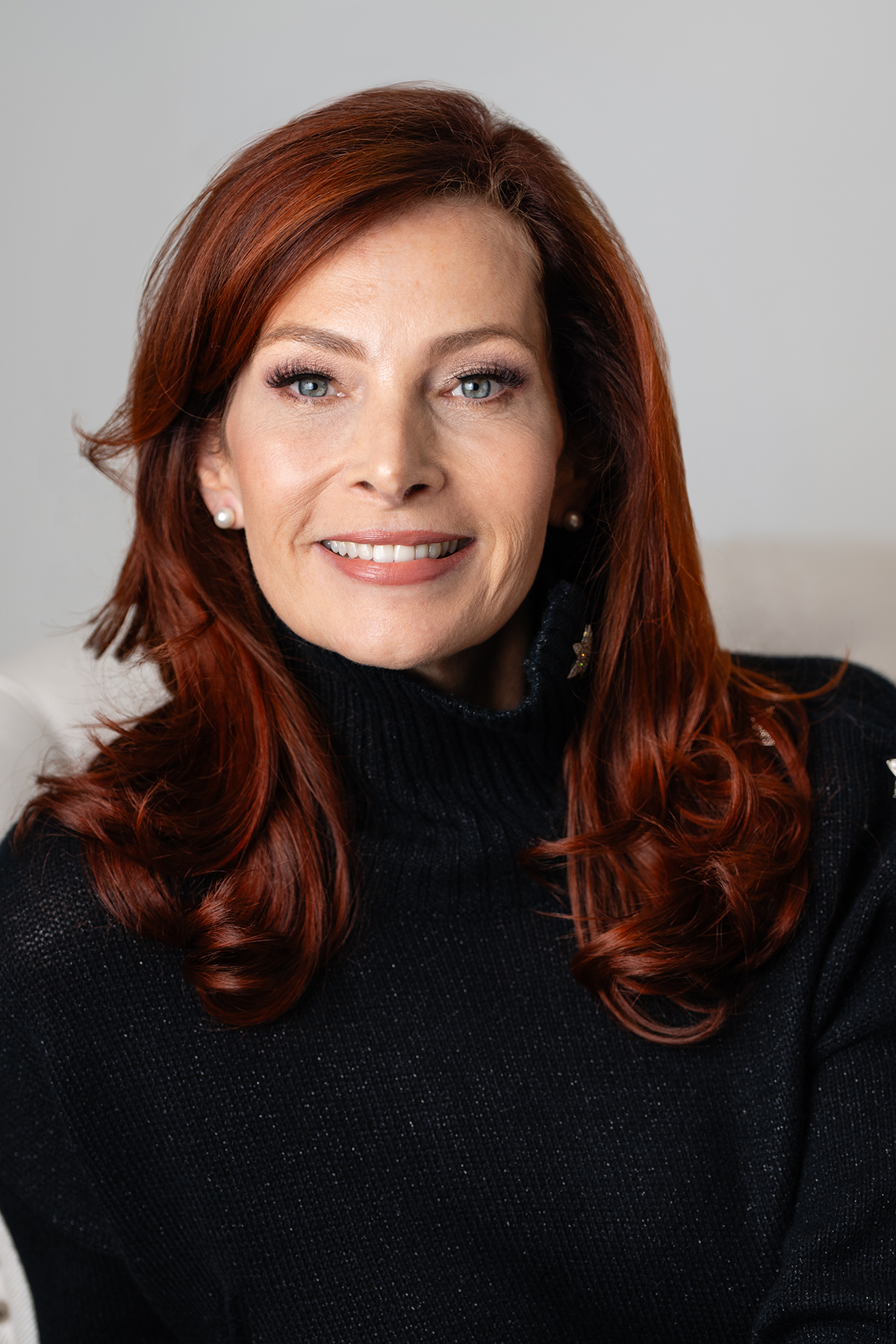
Dr. Tiffany Masson
Founding university president. Clinical and forensic psychologist. CEO, Falkovia.
Dr. Masson advises on consequential AI decisions and designs the human governance architecture that determines whether AI strengthens or destabilizes regulated institutions in healthcare, higher education, and investment.
You have to design it.
I served as a founding university president, where I built a medical school from the ground up. That meant designing governance structures, accreditation strategy, clinical training programs, and executive operating infrastructure from a blank page, under conditions where a single governance misstep could have jeopardized accreditation before the school ever opened. I testified before the Kansas Senate on the school's role in closing the state's rural healthcare access gap.
Before that, I spent two decades in clinical psychology and healthcare leadership. I have worked inside the regulatory, accreditation, and compliance environments that define how healthcare and higher education institutions actually operate. I understand what boards need, what regulators examine, and what keeps institutional leaders awake at 2 a.m.
I was named Executive of the Year. I have been recognized for institutional leadership, governance design, and the ability to build complex operating structures under pressure and public scrutiny.
That background is the entire basis of this practice. It advises on consequential AI decisions and designs the human governance architecture that determines whether AI strengthens or destabilizes a regulated institution.
The founding question was a statistic. Eighty-five percent of AI initiatives fail. I was not willing to be that failure or watch other builders become it. The market was building hard for the ten percent of AI that is technology. Almost no one was building for the ninety percent that is human architecture. That gap is where Falkovia was born.
I build for that ninety percent myself. I am developing an AI product of my own, and the governance, compliance, and human-architecture decisions I advise on are ones I make in real time, not in theory.
My differentiator is the substrate. I am a forensic psychologist. The forensic discipline is the work of seeing what others miss in complex evidence, naming it precisely, and rendering it into something a non-clinician can hold, decide on, and defend under cross-examination. That is the same discipline AI governance now demands of every president, CEO, and managing partner. Built for courts. Now built for boards.
Every engagement I lead is built on a single premise: AI governance is a leadership architecture problem. The institutions that get this right will not be the ones with the best models. They will be the ones with the clearest authority structures, the most defensible decision rights, and leadership teams that understood the difference before it mattered.
I work exclusively with institutional leaders (CEOs, presidents, boards, and investors) on a confidential basis. If your institution is navigating AI adoption and you need governance architecture that will hold, I would welcome the conversation.
Falkovia is built on three substrates that rarely combine in one practice: founding university president who built a medical school from a blank page, forensic psychologist trained to find what others miss in complex evidence, and an engagement model structured to transfer ownership rather than extend dependency. Architecture for executives carrying regulatory, fiduciary, and reputational risk.
No dependency. That is the design.Falkovia's methodology produces a library of named diagnostic, operational, and compliance instruments. Nine anchor the practice across sectors.
G.U.A.R.D. Framework™
Five-dimension governance frame: Governance, Understanding, Authority, Reputation, Design.
Human Authority Line™
Documented boundary where algorithmic recommendation ends and human judgment must remain.
Governance Traceability Map™
For each point on the Human Authority Line™, the control that enforces it, where it lives in the system, the record that proves it held, and the person accountable. Built so the governance is ready to put into practice.
AI Adoption Risk Index™
Psychology-based diagnostic measuring six human variables of AI adoption success or stall.
AI Governance Maturity Scorecard™
Scored assessment across the five G.U.A.R.D. dimensions, mapped to four maturity levels.
Shadow AI Audit
Department-by-department inventory of approved and unapproved AI use.
First 90 Minutes Incident Response Protocol
Operational template for the first ninety minutes of an AI-related incident.
Identity Under AI™
Operational guide for managing professional identity threat as AI scales.
The AI Trust Blueprint™
Foundational framework for executives building AI governance architecture that holds under scrutiny.
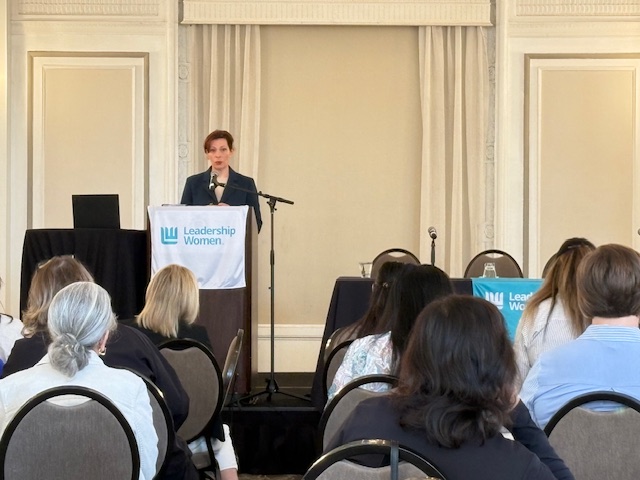
Speaking on AI governance
What clients and colleagues say
The real AI strategy is governance architecture
That is the question every Falkovia engagement is built to answer: the structural question that determines whether AI strengthens your institution or leaves it exposed when something goes wrong.
Decision authority
Who holds the authority to approve, restrict, or override AI in each domain of your institution? Falkovia maps decision rights across clinical, academic, operational, and fiduciary lines so that authority is explicit, documented, and defensible.
Human architecture
Where is the line between AI-assisted and human-required? Falkovia designs the human authority structures (roles, escalation paths, override protocols, and accountability frameworks) that ensure human judgment remains structurally embedded where it matters most.
Governance defensibility
Can your governance withstand scrutiny from your board, your regulators, and your accreditors? Falkovia builds governance architecture that is documented, auditable, and designed to hold under the conditions that actually test institutions: incidents, reviews, and public accountability.
Who this practice serves
Healthcare CEOs and COOs
Navigating AI adoption across clinical workflows, diagnostics, and documentation while managing regulatory exposure, patient safety obligations, and board accountability.
University presidents and provosts
Managing AI integration across financial aid, retention, research, and faculty workflows while maintaining accreditation compliance, shared governance, and institutional integrity.
Boards of trustees
Exercising fiduciary oversight of AI adoption without operational visibility into how AI is actually being used, who approved it, or whether governance structures exist to manage it.
VC and PE firms in regulated sectors
Evaluating AI governance risk in portfolio companies where standard technical diligence misses the human architecture failures that create regulatory, reputational, and valuation exposure.
The philosophy behind this practice
AI governance is 90% human architecture and 10% technology. I know this because I built a medical school from scratch, where a single governance misstep could have jeopardized accreditation before the school ever opened. I am a forensic psychologist. That background produces a lens that reads organizations differently: not just what is presenting, but what is actually driving the AI exposure underneath. It sees what standard governance approaches do not.
The leaders I work with are already some of the sharpest people in any room they enter. What they need is not another advisor, but a partner who builds governance architecture alongside them until they own every piece and are confident it holds. I have sat in that chair. I know what it feels like when a firm builds dependency instead of capacity. Sustainable solutions that outlast the engagement are the only measure that matters. For investors, that means due diligence that surfaces the actual AI governance risk before it becomes a post-acquisition liability.
The goal is always the same. You walk into the hardest room, with the board pressing on AI risks, regulators examining your governance, or an investor asking what is underneath the surface, and you are the most prepared person there. Not because someone handed you a report. Because we built this together, you own it, and you know it cold.
Answers before you ask
Why did you start Falkovia?
Because that partner did not exist. As the founding president of the first medical school in Kansas in a hundred years, I built AI into my strategic plan in 2017. I was further along than most leaders in my seat. I still felt overwhelmed. AI was moving faster than any plan could absorb, and I was the named, accountable human on the line. What I needed was a trusted partner who could help me see what was real, what was not, and what to do next. That partner did not exist. So I built it, designed for the leader I was, designed for the leaders I now serve.
How is your engagement style different from a traditional consulting firm?
Most advisory models are structured to create ongoing dependency. The firm holds the expertise. The client holds the cost. Falkovia is structured the opposite way. Every engagement is designed to transfer ownership, not extend it. The frameworks, the language, the architecture, the documentation, and the operating capacity are yours from day one. My greatest measure of success in this work is that an organization or institution completes an engagement and no longer needs me. The leaders I partner with should walk away more confident, more capable, and more equipped to govern AI on their own. The engagement ends when that is true. That is the design.
Do you work with clients outside healthcare, higher education, and PE/VC?
Yes. My deepest expertise is in healthcare, higher education, and PE/VC because those are the sectors where the human stakes are highest and the governance failures carry the most institutional consequence. The underlying discipline, designing decision authority, override protocols, and governance architecture under regulatory scrutiny, translates across industries. If you are a leader navigating high-stakes AI adoption, I welcome the conversation. We can decide together whether Falkovia is the right partner for what you are facing.
How do you decide if an organization or institution is a fit before taking it on?
Every engagement begins with a confidential scoping conversation. I am looking for three things. Leadership is genuinely engaged, not delegating the AI conversation downward. The organization is past the curious-about-AI stage and into the consequential-decisions-about-AI stage. And the governance question is being asked early enough to design the architecture, not late enough to scramble. If the fit is not right, I will tell you. The work is too consequential to start without that clarity, for both of us.
What is your relationship to the consultants, legal counsel, and compliance teams a client already has?
Falkovia complements them. My work strengthens your general counsel, your CIO, your compliance team, and your existing advisors rather than competing with them. Where a technology choice carries governance weight, I can advise on whether a vendor meets the security, infrastructure, and oversight standards that proper governance requires. And the governance I design is built to be put into practice: the Governance Traceability Map™ gives you a clear, implementation-ready plan, so what we design is what your systems actually run. Strong advisory ecosystems are an asset, and Falkovia is designed to fit inside them.
Do you speak or write publicly? How can someone get on your calendar?
Yes to both. I write regularly on LinkedIn, publish long-form analysis on the Falkovia Insights page, and speak at convenings where institutional leaders are working through AI governance in real time. Recent and upcoming engagements are on the About page. The fastest way onto my calendar is the confidential conversation link below. For a speaking engagement specifically, the same link works, with a note about your audience and the question you want addressed.
The governance architecture your institution needs exists.
Every engagement begins with a confidential conversation about what your institution actually needs.
Start a Confidential Conversation